
WHAT TO DO IF YOUR VISA APPLICATION IS REFUSED
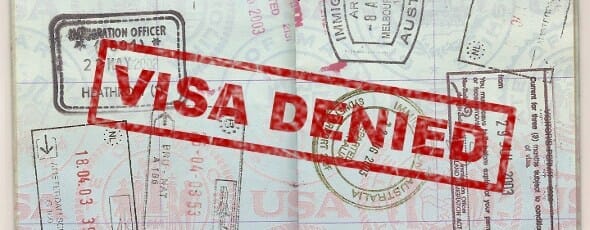
Having your visa application refused can be frustrating, especially after spending time gathering documents, completing forms, paying application fees, and preparing for your trip.
However, a visa refusal does not always mean you can never travel to that country. In many cases, the refusal simply means the immigration or consular authorities were not satisfied with one or more aspects of your application.
The important thing is to understand why your visa was refused, what you can do next, and how to avoid repeating the same mistake.
Here is what Nigerian travelers should do after receiving a visa refusal.
1. READ THE REFUSAL LETTER CAREFULLY
The first thing you should do after receiving a visa refusal is read the decision letter carefully.
The letter should indicate the reason or reasons why your application was unsuccessful. Depending on the country and visa category, this could relate to your financial circumstances, travel purpose, supporting documents, previous travel history, or concerns about whether you intend to leave at the end of your permitted stay.
Do not simply focus on the fact that your visa was refused. Focus on the reason for the refusal.
Understanding the exact concern gives you a clearer idea of what needs to be addressed before making another application.
2. DO NOT RUSH INTO A NEW APPLICATION
One of the biggest mistakes travelers make after a visa refusal is immediately submitting another application without addressing the reason for the first refusal.
A new application containing essentially the same information and documents may lead to another refusal.
Before reapplying, take time to review your previous application and identify what may have been missing, unclear, inconsistent, or insufficient.
A second application should ideally demonstrate that the issues raised in the first decision have been properly addressed.
3. REVIEW YOUR SUPPORTING DOCUMENTS
Your supporting documents should tell a clear and consistent story about your trip.
Depending on the visa category, these may include:
Bank statements and evidence of funds
Employment or business documents
Proof of accommodation
Flight or travel plans
Invitation letters, where applicable
Evidence of family or professional commitments
Previous travel history
Proof of sponsorship, where applicable
Travel insurance, where required
The important thing is not simply having many documents. Your documents should be relevant, genuine, consistent, and appropriate for the purpose of your trip.
4. CHECK FOR INCONSISTENCIES
Inconsistencies between your application form, interview responses, financial documents, employment information, and travel plans can create concerns for visa officers.
For example, your stated occupation should be consistent with your employment or business documentation. Your proposed travel dates should also make sense in relation to your itinerary and other supporting evidence.
Before submitting another application, review the entire application as though you were assessing it for the first time.
Ask yourself:
Does everything tell the same story?
5. STRENGTHEN YOUR FINANCIAL DOCUMENTATION
Financial circumstances are an important part of many visa applications.
However, having a large balance in your account shortly before submitting an application does not automatically guarantee visa approval.
What matters is whether your financial situation is credible and sufficient for the circumstances of your proposed trip.
Your financial documents should reasonably support your stated income, expenses, employment or business activities, and travel plans.
Avoid unexplained transactions or sudden deposits that you cannot properly account for.
If someone else is funding your trip, clearly document the sponsorship arrangement and provide the relevant evidence required for the visa category.
6. REVIEW YOUR TRAVEL PURPOSE
Your reason for travelling should be clear.
Whether you are travelling for tourism, business, visiting family, attending an event, studying, or another permitted purpose, your application should clearly demonstrate what you intend to do during your stay.
Your itinerary, accommodation arrangements, supporting documents, and other information should be consistent with that purpose.
A vague or poorly explained travel plan can make an otherwise genuine application more difficult to assess.
7. CONSIDER WHETHER YOU CAN APPEAL OR REQUEST A REVIEW
Depending on the country, visa category, and reason for refusal, you may have the right to appeal the decision or request an administrative review.
Not every visa refusal comes with an appeal or review option, so you should carefully check the instructions contained in your refusal letter.
If an appeal or review is available, make sure you understand the applicable deadline and requirements before proceeding.
8. GET PROFESSIONAL GUIDANCE BEFORE REAPPLYING
If you are unsure why your application was refused or how to address the concerns raised, getting professional travel and visa guidance can help you approach your next application more carefully.
A travel agency can assist with reviewing your travel plans, identifying documentation requirements, organizing your supporting documents, and helping you understand the application process.
At Links & Tours Ltd., we help travelers with visa advisory and travel planning, including assistance with documentation and preparation for international travel.
Professional guidance cannot guarantee visa approval, because the final decision belongs to the relevant immigration or consular authority. However, proper preparation can help you avoid preventable mistakes.
9. NEVER SUBMIT FALSE INFORMATION
A visa refusal can be disappointing, but it is never a reason to provide false information in a future application.
Do not alter bank statements, submit fake employment documents, provide false information about your travel history, or misrepresent your reason for travelling.
False information or fraudulent documentation can have much more serious consequences than an ordinary visa refusal and may affect future applications.
Always provide truthful and verifiable information.
10. KNOW WHEN YOU ARE READY TO REAPPLY
There is no universal rule that says you must wait a particular amount of time after every visa refusal.
Whether you should reapply immediately or later depends largely on the circumstances of your refusal and whether you can now address the concerns raised.
If nothing has changed and you simply submit the same application again, there may be little reason to expect a different result.
Before reapplying, make sure you can answer three important questions:
Why was my previous application refused?
What has changed or what have I done to address the concerns?
Can I properly support my new application with credible documentation?
A VISA REFUSAL IS NOT THE END OF YOUR TRAVEL PLANS
Receiving a visa refusal can be discouraging, but it does not necessarily mean your travel plans are over.
The most important step is to understand the decision and use it to prepare more carefully.
Instead of immediately submitting another application, take time to review the refusal, examine your documentation, address any weaknesses, and make sure your next application accurately reflects your circumstances.
For Nigerian travelers planning international trips, proper preparation can make the visa application process much easier to navigate.
Need help planning your next international trip?
Links & Tours Ltd. provides travel services including flight bookings, hotel reservations, visa advisory, travel insurance, holiday packages, and customized travel planning.
Start your next journey with proper planning and the right information.